When I first came to Japan I only intended to travel around Japan and surf in some places, and my only goal was to get to Okinawa to surf.
Somehow luck and faith had different plans for me, to accidentally bump into the previous English teacher in the English school that I taught up until now, and to find a job in Japan. Who would have known?
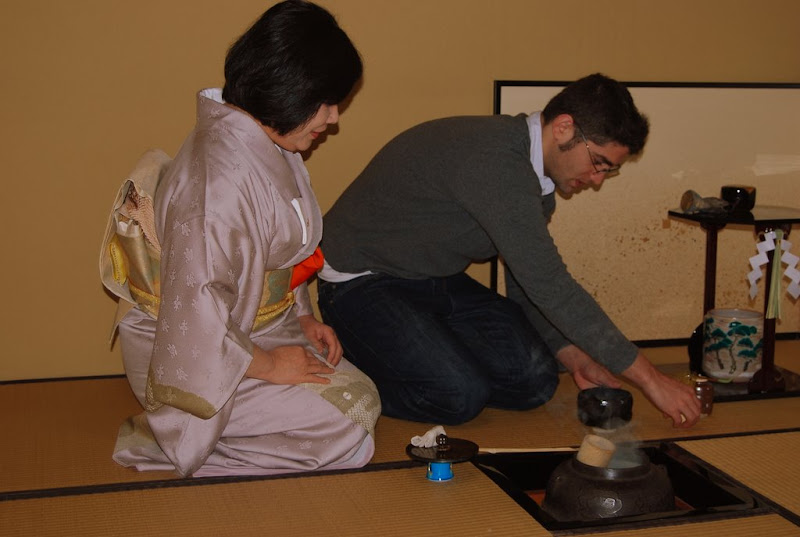
In old Greece the people believed that we are only pawns in the hands of the gods, I believe that being and living in Japan had a different meaning, not a game that is played by some invisible gods, but a learning experience to my life, and for that I’m thankful to whom ever taught me about the culture and language of Japan.
It is truly hard to express how I felt during those two years that I have been with Pacific Rainbow, the people that I’ve met, the sights that I’ve seen, the language that now I’m able to speak, the smells that I’ve smelt, the tastes that I’ve tasted and etc’
All those made me understand some basic things, and I would like to share with you an old Jewish story that will explain my feelings.
How much is it worth?
Not so long ago, when Jewish people used to live in Europe, there was a poor Jew. He could never seem to make a decent living. At one stage, he and his poverty stricken family had nothing but debts. They sold their last egg laying hen to get some money. When that money dwindled down to ten kopeks (a sum equal to a few dollars) he decided to speak with a Rabbi (a Jewish teacher or scholar) for advice. Perhaps he could help him.
The Rabbi listened to him speak with great emotion of his plight, and then the Rabbi spoke, "Every thing is from God. I will give you my blessing that God will help you. Go out, and with this your last ten kopeks, buy the first thing that you are able to buy. From this, God will send his Heavenly help, and you will prosper."
The man thanked the Rabbi, and left his house. He headed to the village market place. There the merchants were selling their wares. He saw a merchant selling beautiful jewelry.
"Perhaps this is what I should buy," he said to himself.
Approaching the merchant, he inquired, "You have such beautiful jewelry, sell me something for my ten kopeks."
"Ten kopeks, you must be mad! For ten kopeks, you can find a rotten potato! My jewelry is worth thousands of rubles."
"Well, all I have is ten kopeks, and I want to buy something from you," the simple farmer told him. "The Rabbi told me to buy the first thing that I find to buy and God will help me with my problems. What can you sell me?" The merchant saw that this was a very simple man, and decided to have a little joke with him. "I’ll tell you my dear friend. I was planning to sell my place in the next world (place in heaven). Perhaps you would be interested in that?"
Without hesitating, the simple farmer pulled out his last ten kopeks and gave it to the merchant. The merchant gleefully took the money and scribbled a bill of sale on a discarded piece of paper and handed it to the farmer.
"It’s a deal!" The merchant said, and shook the farmer’s hand. The farmer walked off happily, with the scrap of paper in his hand. The merchant could not contain his mirth and started laughing. That evening, he could not wait to tell his wife about making the easy money from the simple farmer.
The merchant's wife, however, saw it in a different light. She being of a more believing nature became angry hearing the fact that her husband sold his place in the next world. "I’ll not live with a man who has no place in the next world!" She screamed at her husband. "Get out and don’t come back until you have that piece of paper in your hand!"
The merchant, now terrified by his wife’s anger, left the house and went searching for the simple farmer.
After racing through the narrow alleys of the village, he finally found him. "Listen, I’m sorry that I took advantage of you. Let me give you back your ten kopeks and you give me that piece of paper, OK?"
"No, I’m quite satisfied with the sale. You didn’t take any advantage of me," the farmer replied.
"Listen, let me give you twenty kopeks, really, I feel bad about this transaction."
"No, no. It’s really fine. I’m not ready to sell yet. I’m sure that I’ll make a lot of money."
The merchant realized that the farmer would not sell cheaply, so he upped his offer. "My dear friend let me make you an offer that you can’t refuse. I will give you one hundred rubles for that piece of paper. Now that is a very good sum of money. Don’t turn my offer down."
The farmer was unimpressed. "I need a thousand rubles to pay off my debts and start my life anew. If you will give me that, then I will sell it to you. If, not, then I must be on my way."
The merchant was dismayed, a thousand rubles!!! That is a large sum of money. But the alternative, his wife’s wrath and refusal to live with him caused him to agree readily to the farmer’s terms.
The merchant quickly ran home with the piece of paper to show his wife. "I spent one thousand rubles to buy back this worthless piece of paper that cost ten kopeks. Only for you!" The wife took the paper and went to the Rabbi.
"Rabbi," she said, "tell me, my husband sold his place in the next world to a farmer who came to you for advice. He received ten kopeks for it. I made him buy it back or else I would not live with him. It cost him one thousand rubles. Please tell me, does my husband have a portion in the next world and if so what is it worth?"
The Rabbi, stroked his white beard and explained, "When your husband was willing to sell his portion in the next world for ten kopeks, it was not even worth that. But when he was willing to buy it back for one thousand rubles, you should know that it is now worth even more than that."
The end
The worth of our life in this world and the next is determined by how much we value it. So I, like the characters in this story value my life even more then I used before.
Again, thank you very much from the bottom of my heart for teaching me all about the Japanese culture, I loved it and will always cherish it.


 בבלוג זה
 בכל הבלוגים